


Rabbit Ragu. The Magic Pulled from leftover Rabbit Stew.
- davidcdouglass
- Jan 6
- 3 min read

Rabbit Ragu over Pappardelle
Rabbit Ragu is one of those dishes that doesn’t raise its voice. It doesn’t need to. It sits there quietly, simmering, confident in the knowledge that time, heat, and patience are doing the heavy lifting. This is food that understands restraint—and rewards it generously.
Rabbit, for starters, is misunderstood. In America it’s either a cartoon, a pet, or a novelty meat trotted out to prove someone’s culinary bravery. But in the right hands, rabbit is elegant, lean, and deeply expressive of place. It tastes like what it eats. Herbs, grass, earth. It’s closer to chicken than people expect, but firmer, darker in flavor, more serious. Rabbit doesn’t give you anything for free. You have to earn it.
That’s where Ragu comes in.
A proper rabbit ragout is an act of respect. You break the animal down carefully—legs, saddle, bones saved for stock. Nothing wasted. The meat gets seasoned early, salted enough to matter, then browned patiently in fat until it takes on color and confidence. This isn’t about searing for Instagram; it’s about building a base note that everything else will lean on.
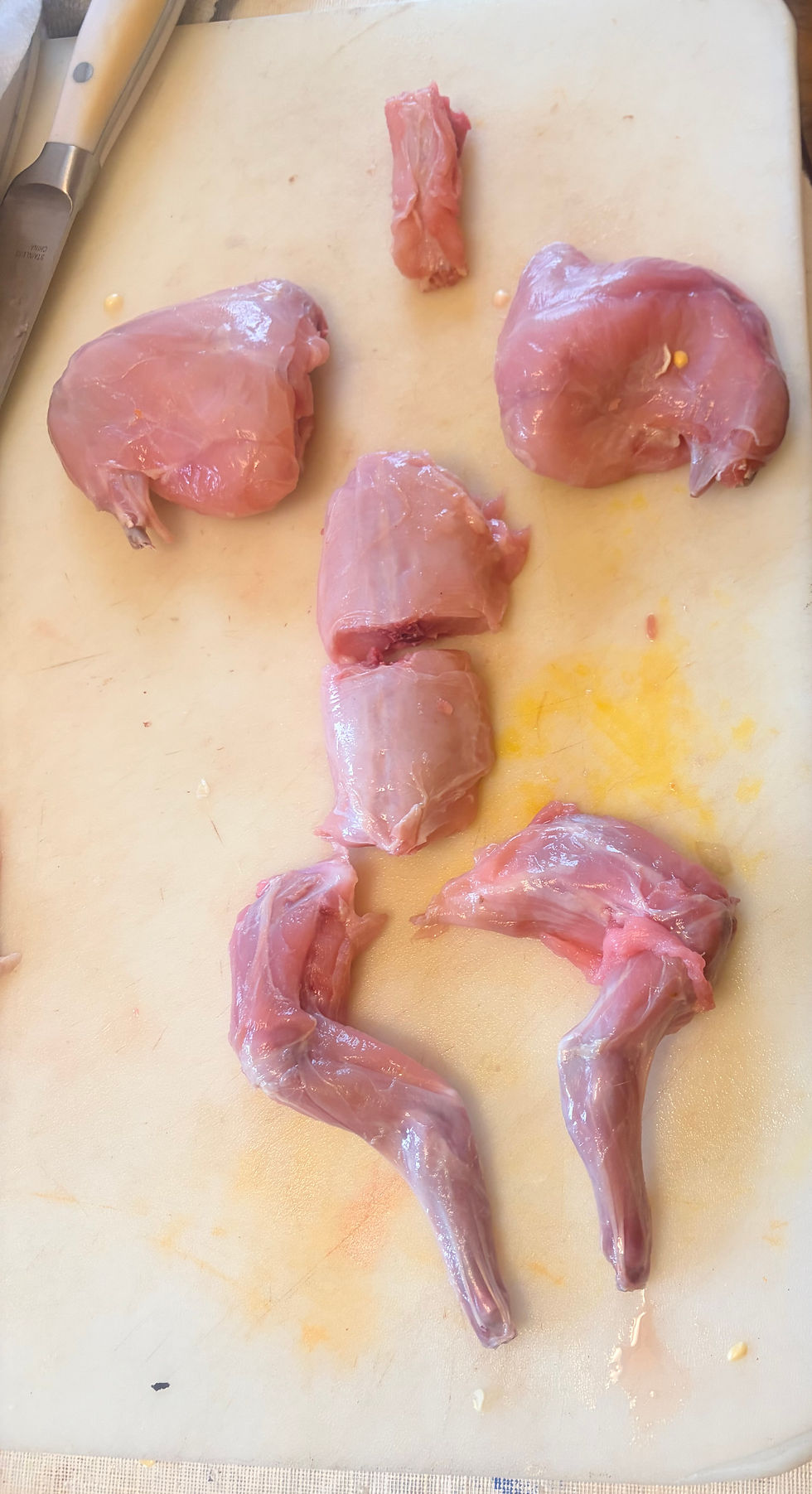
Butchered Rabbit
Then come the aromatics. Onion, carrot, celery—because some things are classics for a reason. Garlic, but not recklessly. Maybe fennel if you’re feeling Italian. Bay leaf. Rosemary or thyme, used with discipline. Wine goes in, usually white, sometimes red, always dry, scraping up the browned bits like you’re rescuing flavor from the brink of oblivion.
Stock follows. Gentle heat. A lid set slightly ajar. And now you wait.
Rabbit needs time to relax. At first it tightens, as lean meats do, stubborn and uncooperative. But given enough low, steady heat, it gives in completely. The connective tissue melts. The meat softens, pulls from the bone, absorbs everything around it. What you end up with isn’t flashy—it’s cohesive. Unified. Every element speaking the same language.

Rabbit during butchering
A good rabbit ragu smells like a kitchen you want to stay in. Savory, herbal, faintly sweet from the vegetables breaking down. The sauce thickens not from cream or tricks, but from collagen and patience. You adjust at the end—salt, pepper, maybe a splash of vinegar or lemon to wake it up. Parsley if you’re feeling generous.
And then you serve it the right way: over pappardelle, soft polenta, or crusty bread that exists solely to drag through sauce. No garnishes that don’t belong. No distractions. Just a bowl of something deeply considered.
Rabbit ragu isn’t comfort food in the lazy sense. It’s comfort earned. It’s the kind of dish that assumes you’ll sit down, slow down, and pay attention. It doesn’t shout nostalgia—it builds it, quietly, spoonful by spoonful.
This is peasant food elevated not by refinement, but by care. A reminder that great cooking isn’t about luxury ingredients or clever ideas. It’s about understanding what you’re working with—and giving it the time it deserves.
Recipe:
2 tablespoons extra virgin olive oil
3- pound rabbit, whole
1 onion, diced
3 small carrots, diced
3 ribs celery, diced
6 cloves garlic, smashed and chopped
2 Sprigs fresh Thyme
4 ounces tomato paste
26 ounce can San Marzano Tomatoes
1 Parmesan rind, optional
2 cups Chicken Stock
16 ounces Pappardelle
Freshly grated Parmesan cheese for garnish
Salt, pepper, and sugar to taste
For the Rabbit:
Clean and butcher the rabbit
Heat the extra virgin olive oil in a wide pot over medium heat.
Pat the rabbit dry and season it with salt and pepper.
Once the oil is hot, add it to the pot and sear on each side for 4–5 minutes.
Transfer to a plate.
For the Ragu:
Add the onion, celery, and carrot to the pot and sauté for 8–10 minutes.
Add the garlic and fresh thyme.
Season well with salt and pepper.
Add the tomato paste to the pot and mash it into the aromatics.
Cook for 5–7 minutes until it begins to brown and stick to the bottom of the pot.
Add the chicken stock
Add the San Marzano’s
Add Parmesan rind.
Adjust seasoning if necessary
Add the rabbit back to the pot.
Bring to a boil, reduce the heat to low, and cover.
Simmer for 2 hours until the meat is tender and almost falling off the bone.
Remove the rabbit from the pot and transfer to a plate.
Let the rabbit cool, and carefully shred the meat from the bones.
Add the shredded meat to the sauce.
Simmer, uncovered, for an additional 20–30 minutes until thick. Taste and season.
Serve over Papardelle (or Polenta)


Comments